
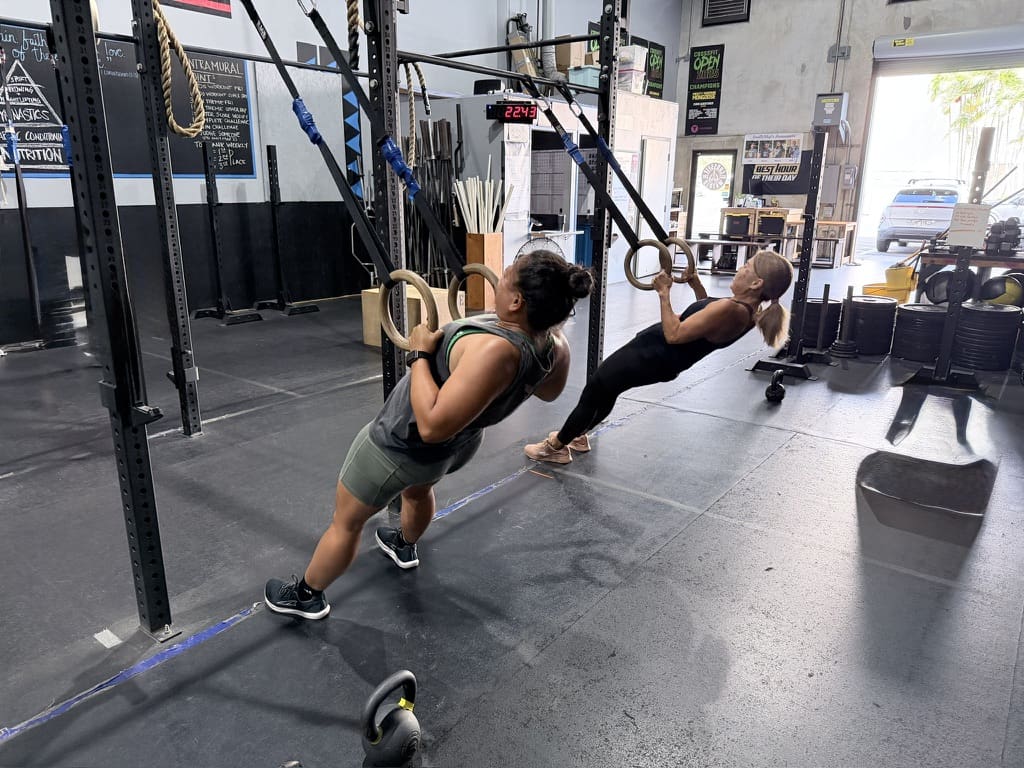
A lot of us grew up with this idea baked in: competing seriously in sport was for the “real” athletes, not for regular people just trying to get in shape. For a lot of women especially, that idea got planted early and never really left. It sounds ridiculous to say out loud in 2026, but the residue is still there. “Athlete” still feels like a word for someone else.
Here’s my pushback: if you exercise on purpose, you’re an athlete. Man or woman, 25 or 55, doesn’t matter. It has nothing to do with your pace, your weight on the bar, or whether anyone pays you to do it. It has everything to do with how you approach your training. That’s actually good news, because it means thinking like an athlete is a mindset shift, not a fitness threshold you have to cross.
The biggest difference I see between people who train and people who train well isn’t genetics or how much time they have. It’s whether there’s a plan and an intention behind each session, and behind the weeks and months that session sits inside of. Most people exercise without much strategy around the why, the how, or the recovery that follows. Athletes don’t. Every session has a purpose, tied to a bigger picture: the micro (today), the meso (this block), and the macro (the season or year). You don’t need a coach or a spreadsheet to borrow that thinking. You just need to be aware of five things.
Intent. Before you start, ask: what is this workout actually for? Building an aerobic base, developing power, working on recovery? Training without intent usually means every session defaults to “moderate” and moderate, done constantly, is where most people’s training problems start. It’s not hard enough to drive real adaptation, and not easy enough to actually let you recover.
Intensity. Easy needs to be genuinely easy, and hard needs to be genuinely hard. Sounds simple, but I see it all the time in this gym, people quietly turning easy days into moderate ones. That means you’re piling up fatigue without the payoff of a real stimulus, and taking the edge off your hard days too. If you know your training zones, stick to them. If you don’t, RPE (rate of perceived exertion) works just as well. And make sure real high-intensity work is in the mix not just “pushing a bit harder” because that’s one of the most protective things you can do for your metabolic health and cardiovascular fitness as you age.
Outcome. Every session should be working toward something, even something small. A competition on the calendar, your first pull-up, a PR by the end of the year. Outcomes, however modest, give your training a why and a why is what keeps you consistent when motivation dips, because it will.
Fueling. This is where I see some of the biggest gaps, even in people who are genuinely fit and dedicated. Underfueling — intentional or not — drives up your stress response, messes with your hormones, and slows down the very adaptations you’re training for. Fueling properly before, during, and after isn’t indulgent. It’s what makes the training actually work.
Recovery. An athlete’s mindset treats recovery as part of training, not a break from it. Real sleep, genuinely easy days, enough protein and carbs to repair and restock, and some mindfulness too. Recovery is where the adaptation from training actually happens. Skip it, and you’re just piling up fatigue.
None of this requires an overhaul. Before your next session, just ask: what’s this for, how hard should it actually be, what am I working toward, am I fueling for it, and how am I recovering from it? That’s the whole secret to thinking like an athlete. It’s not an elite club, it’s a mindset, and it’s open to every single person walking through our doors. You’re already putting in the effort. This is just about making sure that effort has a plan behind it.
Putting It Into Practice
- If you exercise on purpose, you’re an athlete — mindset, not pace, is what defines it.
- Every session should have an intent, not just be “something I did today.”
- Keep your easy days genuinely easy and your hard days genuinely hard.
- Underfueling undermines your training; adequate fuel is what makes adaptation possible.
- Recovery (sleep, easy days, protein and carbs) is part of training, not separate from it.

